
Land Clearing Without Hauling Every Load
Forestry mulching in Sidney for overgrown timber, fallen trees, and dense brush removal
Rural Maine properties accumulate overgrowth and seasonal fallen timber that block access lanes, crowd property lines, and create fire hazard conditions when left unmanaged year after year. Goodhue Enterprises uses forestry mulching to grind standing timber, dense brush, and fallen material in one pass, leaving ground mulch on the property to decompose naturally or hauling it away depending on your land use plans and aesthetic preferences. One-pass clearing reduces the need for separate cutting, loading, and transport cycles that multiply equipment visits and extend project timelines.
Equipment selection and routing during mulching work preserve property drainage patterns and soil structure, which matters in Kennebec County where freeze-thaw cycles stress compacted ground and redirect water flow when equipment tracks the same path repeatedly. The mulching head grinds material at ground level rather than tearing root systems, which prevents erosion on sloped terrain and leaves organic material that stabilizes soil during seasonal moisture shifts.
Schedule an on-site evaluation to review your property density and discuss whether on-site mulch retention or haul-away serves your clearing goals.
How On-Site Mulching Addresses Material Volume
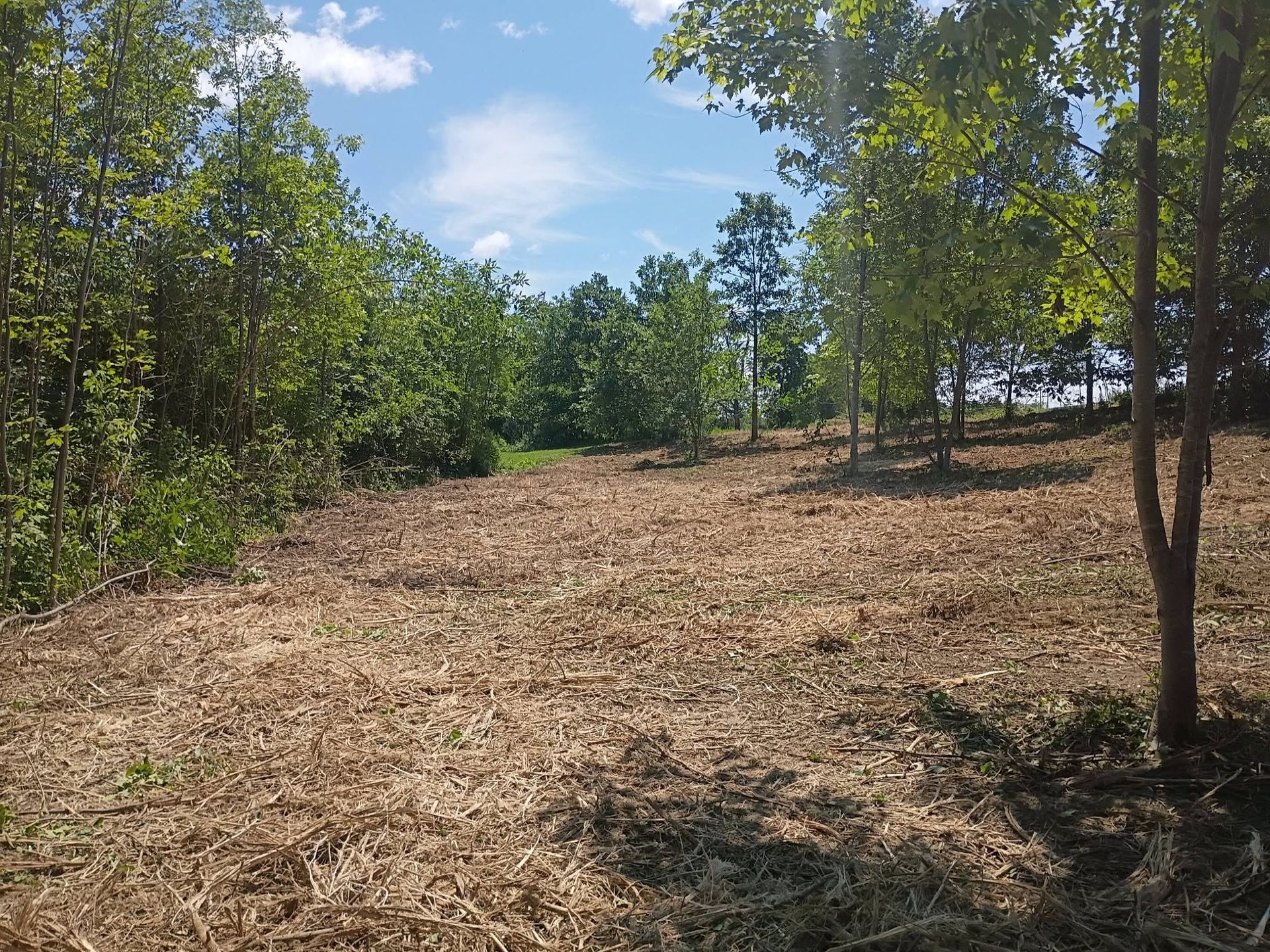
Forestry mulching involves driving the machine through overgrown zones, engaging the grinding head to process standing timber and ground debris, and either spreading the mulch evenly across the cleared area or staging it for removal once the pass is complete. Material transport and disposal costs drop when mulch stays on-site, because you're not paying for repeated dump runs or container swaps as debris volume accumulates.
After the mulching pass finishes, you'll see cleared sight lines, accessible ground that equipment or foot traffic can cross, and either a layer of ground mulch that suppresses regrowth or bare soil if the mulch was hauled away. Property drainage stays intact because the machine avoids repeated tracking that creates ruts, and soil structure remains stable enough to support seasonal freeze-thaw cycles without shifting or settling.
The tradeoff between on-site mulching and haul-away depends on property access width, whether you want organic material left to decompose, and if future development requires bare soil instead of mulch coverage. Dense timber or heavy fallen material generates more mulch volume than sparse brush, so pre-clearing assessment helps predict how much material will remain on the ground after the machine completes its pass.
Answers to Frequent Service Questions
Land clearing questions typically focus on equipment capability, seasonal timing, and what happens to the material after the machine finishes its work.
What size timber can forestry mulching equipment handle?
The mulching head processes timber up to several inches in diameter depending on wood density and machine capacity, clearing saplings, overgrown brush, and small to medium trees in one pass without separate chainsaw work.
How long does it take to mulch an acre of overgrown land?
Clearing speed depends on vegetation density and terrain conditions, but typical properties see one to two acres cleared per day when access allows continuous machine operation.
Should I keep the mulch on the ground or have it hauled away?
On-site mulch suppresses regrowth and adds organic material to the soil, while haul-away creates bare ground for construction, grading, or planting projects that require clean soil surfaces.
When is the best time to schedule forestry mulching in Sidney?
Late fall after growth slows or early spring before new shoots emerge offers the easiest clearing conditions, and frozen ground reduces rutting risk when equipment crosses the property.
Will forestry mulching damage the soil or create erosion problems?
Equipment routing avoids repeated compaction, and leaving the root mat intact prevents erosion that follows mechanical uprooting, so soil structure stays stable through seasonal moisture changes.
Goodhue Enterprises assesses property density and access conditions before starting the job, so equipment routes and material handling align with your land management goals. Reach out for a no-cost property walk and clearing estimate.