
Removing Stumps That Block Future Land Use
Stump grinding in Sidney for tree removal cleanup, drainage improvement, and tripping hazard elimination
Tree stumps left after logging or storm damage don't just sit there—they sprout new growth, create tripping hazards, and block drainage paths across your property. Stump grinding removes stumps below grade by chasing roots beneath the surface and eliminating regrowth potential. Goodhue Enterprises operates stump grinding equipment sized for Maine soil density and the freeze-thaw heave common in Kennebec County, handling residential and commercial properties where stumps interfere with land use or safety.
The grinding process goes below grade to prevent regrowth, cutting roots beneath the soil surface and leaving wood chips that can be hauled away or spread as mulch depending on your property plans. Equipment selection depends on stump diameter, root spread, and site access—frozen ground during winter can stabilize soft areas for equipment but slows grinding depth.
Call for a free estimate and discuss stump removal for your Sidney-area property.
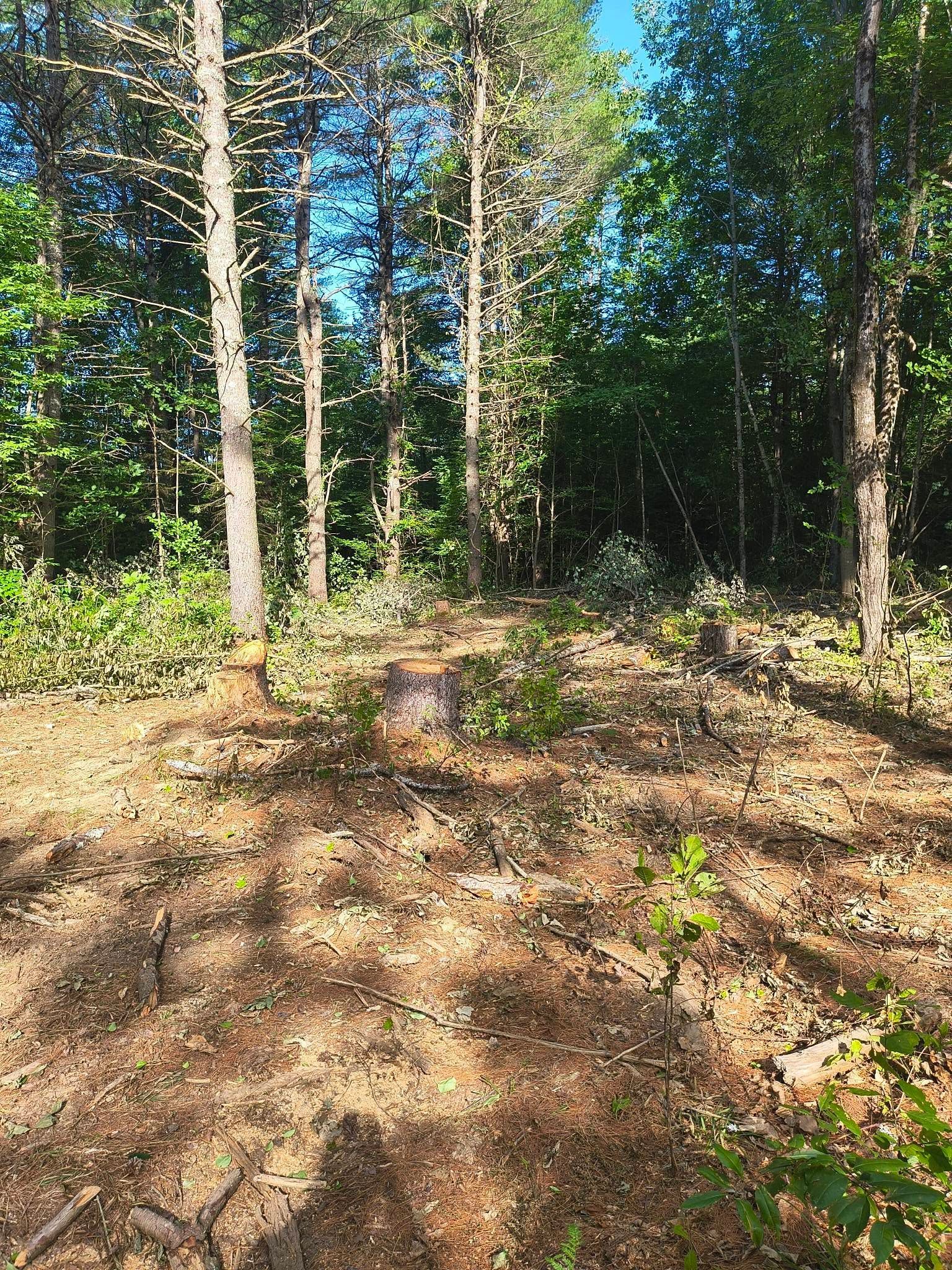
How Stump Grinding Addresses Regrowth and Drainage
Grinding removes the stump and major roots below the soil line, stopping the tree from sprouting new shoots. Depth varies based on future use—if you're replanting or building, grinding goes deeper to clear the root mass. If you're restoring lawn, grinding stops just below turf level and chips get raked out or left to decompose.
Once grinding finishes, you'll see a filled void where the stump was, with the area graded level and wood chips either removed or redistributed. Water that previously pooled around the stump now drains through, and you can mow or grade across the area without obstruction. The root system decays underground over time without sending up new growth.
Chip hauling adds time and cost but clears the site completely for immediate replanting or construction. Leaving chips on-site provides organic mulch but creates a low spot as chips settle and decompose. Your property layout and next steps determine which option makes sense for the job.
Common Questions About This Service
Homeowners and property managers across central Maine ask similar questions before scheduling stump grinding. These answers cover the details that affect timing and cost.
What determines the cost of grinding a stump?
Stump diameter, root spread, and site access drive the cost. Larger stumps take more time and wear on equipment, while stumps near structures or on slopes require slower, more careful grinding to avoid property damage.
How deep does stump grinding go to stop regrowth?
Grinding typically removes the stump six to twelve inches below grade, severing major roots and eliminating the tree's ability to resprout. Deeper grinding is available if you're excavating for construction or replanting in the same spot.
Why does frozen ground affect stump grinding in Sidney?
Freeze-thaw cycles in Kennebec County harden soil around roots, slowing grinding depth and increasing equipment wear. Frozen ground also stabilizes soft or wet areas, making stumps in low spots more accessible during winter than during spring thaw.
What happens to the wood chips after grinding?
Chips can be hauled away completely, spread across the property as mulch, or left in the stump void and covered with topsoil. Hauling clears the site immediately; leaving chips provides free mulch but creates settling as decomposition occurs.
When should I schedule stump grinding after tree removal?
Schedule grinding once the tree is removed and debris is cleared so equipment can access the stump without obstruction. If you're clearing multiple stumps from forestry work, grinding all stumps in one visit reduces mobilization cost.
Goodhue Enterprises coordinates stump grinding with tree removal, site prep, and debris hauling across Sidney and Kennebec County. Schedule a free estimate to assess your stump situation and discuss chip removal or retention based on your property plans.